
When My Way Isn’t God’s Way | 6/28/26
-
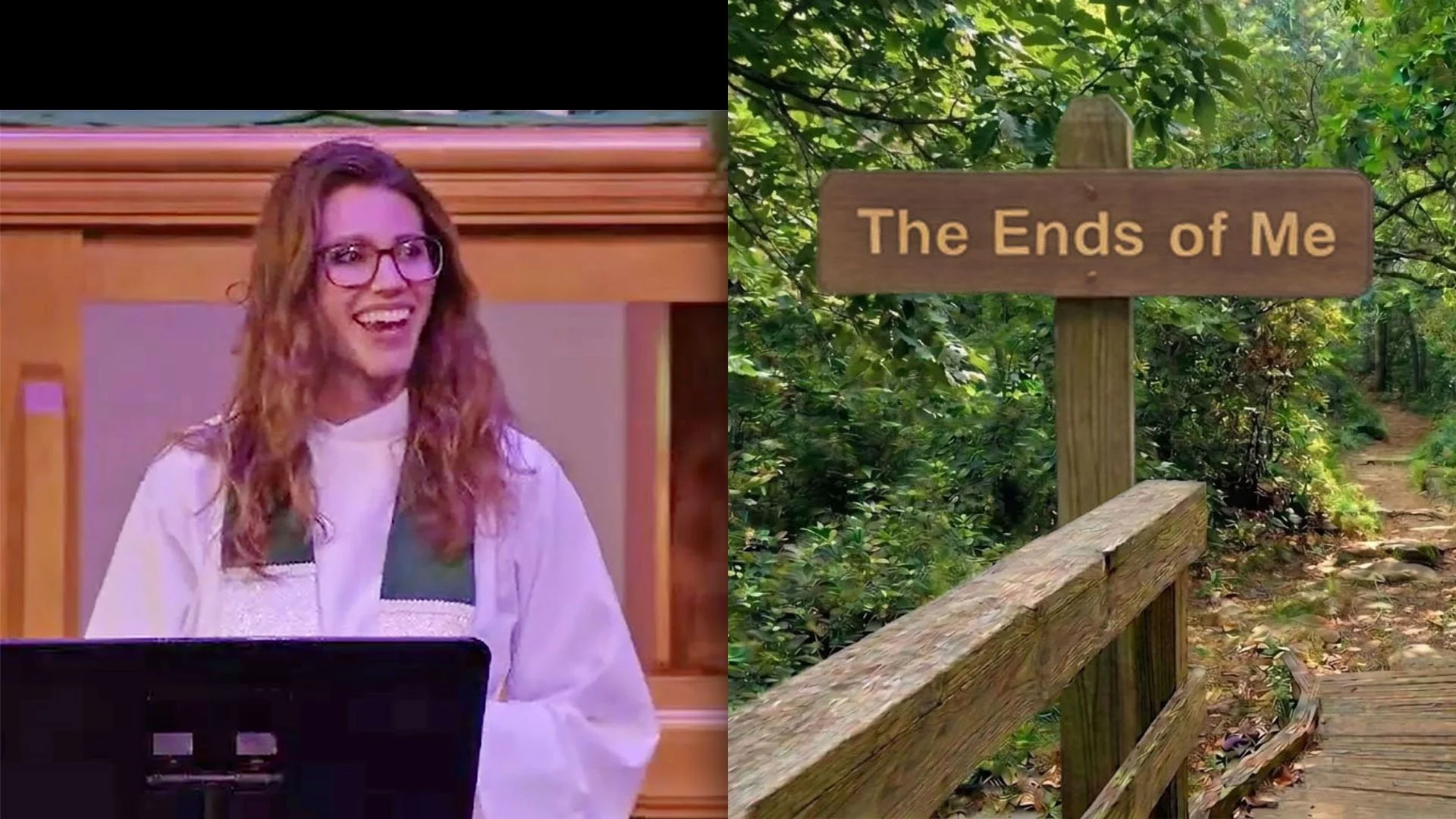
The sermon describes Jonah carrying out his mission while harboring anger and hatred in his heart the whole time. Have you ever gone through the motions of doing the right thing outwardly while feeling something very different on the inside, and what did that cost you?
When you're asked to name something you're genuinely grateful for about someone you're angry with or deeply disagree with, how does that land for you? Is there a person or group where that exercise feels almost impossible right now?
The people of Coventry had every earthly right to choose anger and retribution after what was done to them, and yet they chose to write "Father, forgive" in the ashes. Is there a situation in your own life where you know you have every right to hold onto anger, but sense you might be invited to something different?
The sermon describes Jonah sitting under his shrub, sulking and waiting to see if God would change his mind and destroy Nineveh anyway. Have you ever found yourself rooting for an outcome that, if you're honest, wasn't really about justice but about your own sense of satisfaction?
Transcript:
You know, it's more than just a word or phrase that we say — or at least it should be — when we say that Jesus is Lord. It is an audacious claim that we make, one that indicates not only what we believe or in whom we believe, but one that very clearly states what we do not believe. It is a statement that should have an impact on the way that we choose to live our lives. Jesus's lordship should influence the choices that we make in our communities, in our workplaces and businesses, and in our homes around the dinner tables. But does it? Because the world seems to question the validity of our Christian witness with every passing day. So how are we, as people who claim that Christ is our Lord, to move from the path that is carved out by the world around us and onto a path that is shaped by the very person of Jesus Christ?
Over the next several weeks, we will explore these questions together. And this morning, we begin by learning from someone who didn't quite get it right — the failed prophet Jonah. Now, many of you probably remember the story of Jonah from Sunday school days. It is a fan favorite in the Copeland household, and you'll see why in just a little bit. But hearing it as an adult, it's a wild story. If you need the Cliff Notes version, here's the story according to, well, me.
Jonah is asked by God to carry an important message to the people of Nineveh. Now, at this time, Nineveh was known as a dangerously wicked city — it could have been described as pure chaos. So it makes sense that Jonah feared for his life and said to God, "Absolutely not. Don't sign me up for that." And so he bolts in the opposite direction toward a city called Joppa, which was a port city where he hopped on board a boat to sail all the way to Tarshish, which could have been the very ends of the world as people thought of it at that time.
And while he was on that ship heading to Tarshish, a huge storm comes over and threatens to topple the boat. So the crew members got together and thought, "You know what? This storm — this is all Jonah's fault." And so they throw Jonah overboard, and he gets swallowed up by a whale, or a big fish — no one really knows. But it's interesting to think of it as a whale. So Jonah is swallowed up, and he spends three days in the belly of a whale, big fish thing. Can you imagine that for just a moment, please? That you were hanging out on the worst cruise of your life inside the belly of a whale, big fish thing.
While he was in the belly, he had a moment where he grappled with God, and eventually he said, "Okay, fine. I will go and I will do the thing that you have told me to do." And so the big fish throws Jonah up onto the shore — you can see why it's a fan favorite in my household of two boys — throws Jonah up on the shore, where he then goes to Nineveh and he does finally say the thing that God called him to say, to make sure that Nineveh knew that God was going to destroy the city if they didn't repent and turn from their wicked ways.
And guess what, y'all? They did it. The king of Nineveh orders all of the people and their animals to don sackcloth and ashes and repent of their sin. Can you imagine getting a pig into sackcloth? I can't. But they did, and they repented. And so God chose not to destroy Nineveh.
This is often where we end the story of Jonah, right here, because it's happy and exciting — everyone's repented, all is right in the world. And so you might be wondering, "Well, why do you think he's the failed prophet?" Well, there are four chapters in the book of Jonah, and we just ended at the third chapter. There's one more chapter, and that's where we're going to pick up the story this morning. You can follow along as I read for us.
But Jonah thought this was utterly wrong — this being that God chose not to destroy a whole city. He thought it was utterly wrong, and he became angry and he prayed to the Lord. "Come on, Lord. Wasn't this precisely my point when I was back in my own land? This right here is why I fled to Tarshish earlier. I know that you are a merciful and compassionate God, very patient, full of faithful love, and willing not to destroy. At this point, Lord, you may as well take my life from me, because it would be better for me to die than to live." The Lord responded, "Is your anger a good thing?"
I'm going to pause here. There's a gentleman by the name of Robert Alter, who is a Hebrew scholar who translated through his scholarship the whole Old Testament. In this part of his translation, the way he puts God's response hits closer to home with me, so I'm going to share that with you. He says that God responds, "Are you good and angry?"
So are you good and angry, Jonah? But Jonah then went out from the city and sat down east of the city, where he made himself a hut and sat under it in the shade to see what would happen to the city. Then the Lord God provided a shrub, and it grew up over Jonah, providing shade for his head and saving him from his misery. Jonah was very happy about the shrub. But God provided a worm the next day at dawn, and it attacked the shrub so that it died. Then, as the sun rose, God provided a dry east wind, and the sun beat down on Jonah's head — I don't think we can imagine that at all in Florida — so that he became faint. He begged that he might die, saying, "It's better for me to die than to live." God said to Jonah, "Is your anger about the shrub a good thing?" Jonah said, "Yes, my anger is a good thing, even to the point of death." But the Lord said, "You pitied the shrub for which you didn't work and which you didn't raise. It grew in the night and perished in the night. Yet for my part, can't I pity Nineveh, the great city in which there are more than 120,000 people who can't tell their right hand from their left, and also many animals?"
Friends, this is where Jonah ends. This is the last verse of the whole book. This is the Word of God for us, the people of God. Thanks be to God. Will you pray with me?
O God, we give you thanks for the wild, crazy stories we read in your holy Scripture. We give you thanks that by some mystery we find ourselves in the text, and even then your word speaks to us a word of hope and renewal and reconciliation, that we might shape our lives around the very life of Christ that shows up for us. Open our hearts and our minds that we might hear all you have to say to us this day. In Christ's name we pray. Amen.
"It would be better for me to die." What an odd thing for the prophet to say after a very successful mission to the people of Nineveh. On all accounts, Jonah's time in that wicked city would have been a missionary's dream come true, would it not? Everyone repented — what a glorious day! And yet here Jonah is, sitting under a shrub, so very angry that Nineveh repented. So angry, in fact, that he would rather die.
To understand Jonah's anger, though, we need to know a little bit about the geopolitical climate in the moment that this story happens in the biblical text. Nineveh, at the time, was the capital city of the Assyrian Empire, which was the most powerful empire of the time. It meant that politically, militarily, and economically, Nineveh was Israel's largest threat. At this time, Israel is not a united kingdom — it has been split to the north and to the south. So we are talking about the smaller northern portion of Israel at the time. The people who were residing in Nineveh, therefore, were considered foreign. They were not Jewish, and from Jonah's perspective, they had no business being incorporated into the care of his God, the God of Israel, because they were the sworn enemy — the ones who threatened the very lives of Israel at that time. And so Jonah couldn't stomach the thought that they had any part, that he had any part to play, in their repentance, reconciliation, and then incorporation into God's kingdom.
But he did. And what makes it worse for me is that as he did so — as he was going to share the message that God told him to share to the people of Nineveh — he was doing it while harboring deep anger and hatred in his soul for those people, hoping that his mission would ultimately fail. He didn't want them to repent. He wanted them destroyed. Which begs the question: was Jonah's witness truly credible? God was able to use it to work a miracle of repentance. But from Jonah's perspective, from Jonah's heart, was that message honest? Was it pure? Was it with good intentions for the well-being of the people of Nineveh?
But here's the thing. God already knew Jonah's thoughts about Nineveh long before the big fish became a part of the story. And yet God still chose Jonah to carry this message anyway. Because this isn't only a story about Nineveh's repentance and transformation, though that's a really good part of the story. It is also a story about Jonah's sanctification — Jonah's participation in the expansiveness of God's grace and mercy was meant to widen Jonah's own capacity for mercy as well.
Jonah, in this moment, had the opportunity to grasp the sheer vastness of God's love, and he missed the mark. But before we cast the stone of judgment upon Jonah, I would imagine that there has been a moment in your life when you have been so filled with anger toward another human, or a group of people, that you wished for something that you never thought possible for you to wish or even be capable of wishing. Or maybe there's been a moment when you have been so sure that those people had simply gone too far, that they couldn't possibly be able to reconcile and make right. Or maybe you've wished someone good wishes through very gritted teeth, and maybe you felt that this grace that we get to experience couldn't possibly be for them, because they would never be able to see the light.
So maybe Jonah's story — Jonah's story of sanctification — just might be the story about our own sanctification, that we might have the possibility to widen our own perspective and our own hearts to the expansiveness of God's love.
This summer, I've tried a new way of having morning devotion through an app called Lectio 365. For those who have young children, it's great because it reads a set of scriptures and prayers and meditations to you in a short segment — about ten minutes — every morning. And it's great when you have little boys who are running around and can't stop moving.
This week has been focused on the practice of prayer and how it is intended to shape our lives. And on Tuesday, knowing that I would be preaching this sermon right here, the meditation was focused on praying for the leaders of our nation — which I was all in for, because that is something that has been a part of my practice for as long as I can remember — until the voice of Carla Harding prompted me to name one thing about the leaders of our nation, all of them, that I could be thankful for. And friends, I really struggled. It took me a really long time to find something. In fact, before I even got to anything, I visibly shouted out to God, "Absolutely not." I was Jonah in that moment. And the anger that I felt so deep in my spirit is one that is not part of who I am, but is an outgrowth of what I have learned and seen both in the news and when I have actual conversations with people here in Gainesville who are struggling. And so the anger that I felt was one that I've been living with for quite some time, that I didn't know I had to put a name to, and it bubbled up from the depths of my soul in a way that was ugly. And it was not Christian.
And so as I was doing that and feeling that, I heard the voice of God in Robert Alter's translation that I shared moments ago: "Are you good and angry?" And I thought, oh, the irony. And when I refocused my attention on the act of prayer, which is what should ground all of us, Carla was narrating these words: "God wants all people to be saved, including political leaders and advisors shaping policies and making decisions that affect the people living in my community." And in that moment, I realized for myself that God's grace truly was so much bigger than I can even comprehend. I thought I had it all figured out. I thought I knew how this grace thing worked, but apparently I didn't, because there's a whole group of people that I unintentionally left out of God's umbrella of grace.
Friends, the invitation to pray for the people that I harbor such deep-seated anger toward is as much, if not more, about me — about my own sanctification — than it is about God's expansiveness. Because the truth is, and always has been, that God's capacity for transformative grace is so much bigger than my limited understanding of who gets to receive that grace and who doesn't. That's not my choice. That's not my decision. The invitation to pray in this way, in fact, might actually be the bedrock of reconciliation and justice that God has called us to from the very beginning, because what it does is offer us the opportunity to widen our scope of understanding to more deeply reflect the heart of God. Because that's the point. The point is for us to reflect God, not us.
The practice of prayer as a path toward this idea of reconciliation has been the driving force of a ministry at a place called Coventry Cathedral in the United Kingdom, a place that I had the opportunity to go and see for myself. And it's amazing, first, to stand in a building that was built in like the eleventh century — wild. Second, this cathedral has no roof on it. In fact, it was in ruin, because on November 14th, 1940, Coventry Cathedral and the town of Coventry was absolutely decimated by a German raid called Operation Moonlight Sonata. Nearly 500 bombers dropped tens of thousands of rounds of ammunition and explosives across the whole city — homes, businesses, the cathedral — decimated.
The very next morning, in the aftermath of all the destruction, the survivors of the community and the worshiping community there came to the cathedral to start picking through the rubble. And when they arrived, the altar was still there. And instead of gold lettering behind the altar, what they saw that morning after the bombing was that someone had taken ashes and soot and written behind the altar: "Father, forgive." Two simple words. Father, forgive. These were some of the last words that Jesus spoke from the cross in Luke's Gospel account. Father, forgive — two words that became the core identity of this worshiping community and the whole city as they rebuilt from the ground up.
You know, those people had every right to turn to anger and hatred and seek retribution. But they didn't. They might have been angry — who wouldn't be? But instead of choosing that path, they chose the path of forgiveness, following in the example of Christ. You know, it didn't happen overnight and couldn't have happened overnight. But over a period of eighty-six years, the people of this community offered prayers — the same prayer that Steve is holding up in his hand right there, the same prayer that you have as a bulletin insert to take home. They prayed that prayer for years as a community, and then they expanded the community to a group of people they call the Community of the Cross of Nails, which is worldwide and focuses on the work of reconciliation — of getting people of all differences to one common table to work together. And so every day at noon in the cathedral ruins, they gather the community and they pray this prayer of reconciliation together. Not just that community, but everyone worldwide who's a part of this work.
You know, I wonder what it might have looked like if Jonah had used the time in the belly of the whale — a place that felt like absolute hell to him — to pray for the people of Nineveh that he was called to go to, in the way that the people of Coventry prayed for their enemies who had made their lives a living hell. And I wonder how that might have changed Jonah's interactions with the Ninevites, how it might have changed Jonah's heart.
I wonder how Christ might influence our choices through this way of praying too. Because when we allow our lives to be shaped daily by our belief that Jesus is Lord, we let go of what we expect to be the right and good and holy and only way. We let go of who we believe to be in or out. And when we allow prayer to open our understanding of God's limitless grace, we have the opportunity to participate in the ongoing work of reconciliation and justice that God established a long time ago and that God is still up to right now. We have the privilege and opportunity to participate in what God is doing in the world. And as we pray, we expand our capacity to do the work of love — even when it's hard, even when we don't agree, even when it seems too much to give. Because that is God's grace.
As we close, I invite us to read this litany of reconciliation together. The words will be on the screen — join us with the words that are in yellow.
Friends, all have sinned and fallen short of the glory of God.
The hatred which divides nation from nation, race from race, class from class — Father, forgive.
The covetous desires of people and nations to possess what is not their own — Father, forgive.
The greed which exploits the work of human hands and lays waste the earth — Father, forgive.
Our envy of the welfare and happiness of others — Father, forgive.
Our indifference to the plight of the imprisoned, the homeless, the refugee — Father, forgive.
The lust which dishonors the bodies of men, women, and children — Father, forgive.
The pride which leads us to trust in ourselves and not in God — Father, forgive.
Friends, be kind to one another, tenderhearted, forgiving one another as God in Christ forgave you.
Amen.