
-
When you think about your upbringing, what specific behaviors did you observe in your parents or those you trusted that might still be conditioning how you perceive different groups of people today?
Seeing others differently is an ongoing journey of unlearning and relearning—what is one specific perspective you feel you are currently in the process of unlearning?
If you took ten minutes at the end of each day to look back, which of your recent encounters with people would help you notice where you didn't show up the way you intended?
Do you have a group of friends who are willing to be honest with you and hold you accountable with gentleness and grace when you need to be called out?
In the midst of the brokenness in the world, what is one practical way you can show up tomorrow to help bring a sense of healing or reconciliation to your own neighborhood?
Transcript:
This morning, our scripture reading comes from the second letter to the Corinthians that is found in the New Testament. You can follow along, if you'd like, on the screens as I read it for us this morning.
So then from this point on, we won't recognize people by human standards. Even though we used to know Christ by human standards, that isn't how we know him now. So then, if anyone is in Christ, that person is part of the new creation. The old things have gone away. And look, new things have arrived. All of these new things are from God, who reconciled us to himself through Christ, and who gave us the ministry of reconciliation.
This is the Word of God for the people of God, and God's people say, Thanks be to God. Would you pray with me? Come, Holy Spirit, and breathe life into the words that I speak. That they might carry a word from you into our hearts and lives this morning. Amen.
We've all done it. You hear an accent, or you observe a behavior, or you notice someone's skin tone, or you see someone's clothing, hairstyle, or hat, or perhaps a piercing or a tattoo, and you start making assumptions. Often, some value judgment gets attached to those assumptions, and we decide how we will treat people based on the value that we choose to assign.
The sum of our experiences conditions us to perceive others in particular ways, for good or for bad. And those experiences include things like what's been modeled for us along the way. The behaviors that we noticed from parents and siblings and trusted others that we watched, how they interacted with people. Or, those experiences include what we have heard or read along the way, or what we've been taught. And they include our own past encounters with different people and how those experiences have prompted responses or reactions in future settings.
The Apostle Paul was no different. So we're all in good company today, friends, and acknowledging that we all do this. When he was still known as Saul, you may remember that early in the book of Acts, we hear about him having inherited a worldview that conditioned him, enculturated him, to hate people of the Way, the early movement of Christ followers that became the church. In fact, not only was he enculturated to hate them, but Paul thought that it was his moral obligation to persecute them, even to the point of death…until he had a life-altering moment where he encountered Christ on the road to Damascus.
In today's scripture, when Paul speaks of how we previously saw people, he's talking about himself and others who are part of his group, but he's talking about himself and how he previously saw people through his own personal experience. And what we hear is not only did he previously see Christians, followers of Christ, through tainted lenses, but he even saw Christ through tainted lenses. Even though we used to know Christ by human standards, he says, that isn't how we, or how I, know him now.
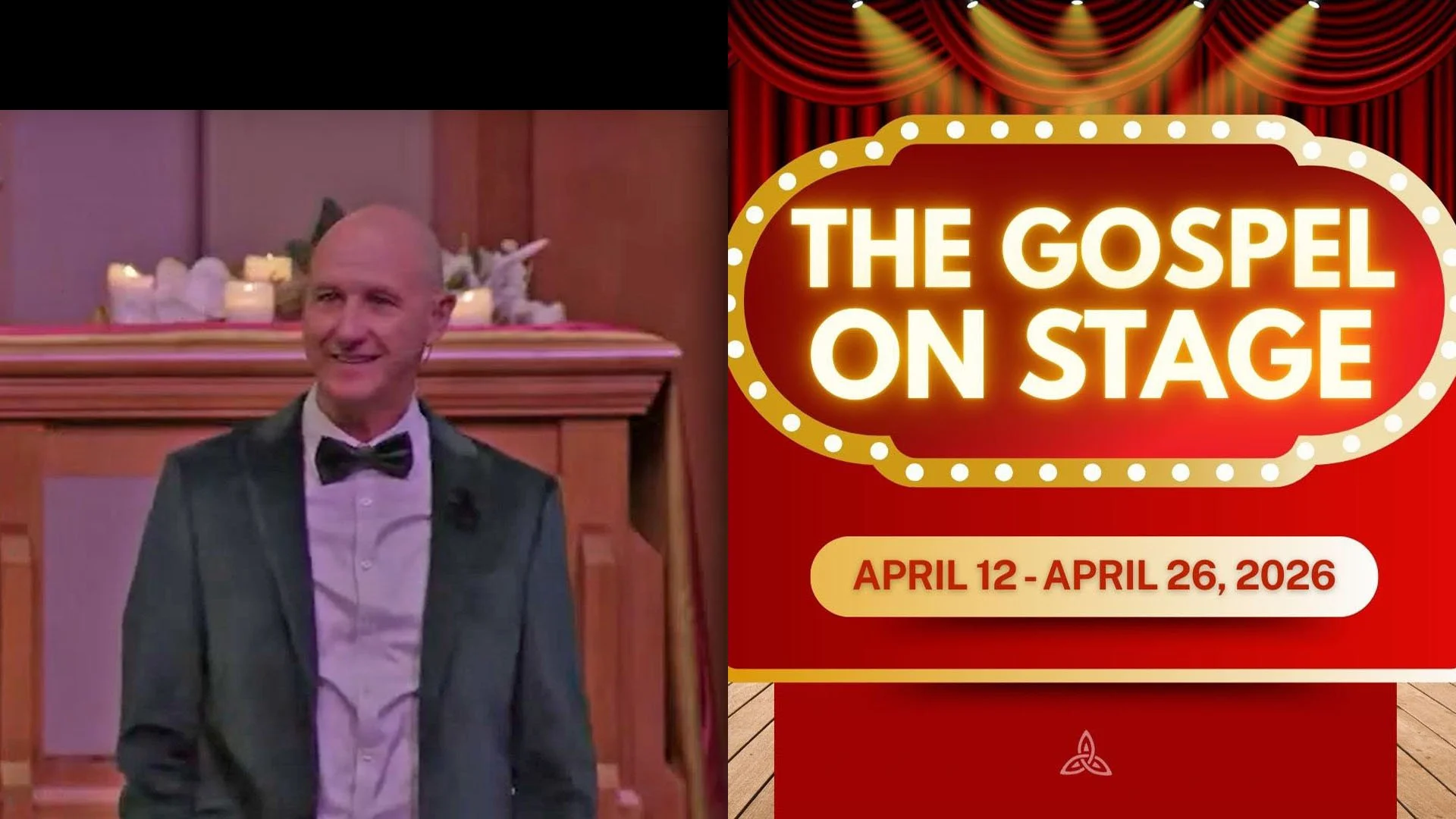
Today is the last week in our series on the Gospel on Stage, and our Broadway musical for this morning is Wicked. So I want to start by asking the question, because I'm curious, of who's in the room with me today, how many of you have either seen the musical or one or both of the movies, or at least have some familiarity with the story or the plot line of Wicked? Okay, and how many of you are thinking, I know nothing about this? I have no clue. All right. So, here's a little bit of background for everybody that can bring everybody into the story and the experience.
Wicked began as a written work of fiction that was then turned into a Broadway musical, which then became not one, but two movies, most recently. It is the backstory of what we know as The Wizard of Oz, and particularly the backstory of how the Good Witch of the North, Glinda, and the Wicked Witch of the West become who they are in the story of The Wizard of Oz.
And so this story goes all the way back to when two young women, Elphaba and Glinda, are assigned to be roommates together at Shiz University. Now, these roommates who have been thrown together might as well have come from different universes. There was nothing similar about the two of them. And when they are thrown into the same room, Glinda quickly makes assumptions and places value judgments on Elphaba, and treats her as if she clearly came from an inferior universe. Well, there's a pivotal moment in the story where Glinda has planned something that will cause embarrassment to Elphaba. But as that moment is unfolding, suddenly Glinda has a heart shift that moves her from ridicule to compassion, and the most unlikely friendship begins to blossom between these two until the day comes when they must take different paths.
A scene from the Broadway musical, Wicked
Glinda: You weren't going to say goodbye?
Elphaba: I didn't think you'd want me to.
Glinda: Want me to? Of course I—I just didn't think you would want me to stop you.
Elphaba: You'd have tried. You always try
Glinda: It's what I do.
Elphaba: You have a way of making people believe in things. Even in me, once.
Glinda: I still do.
Elphaba: Don't. It'll just be disappointing.
Glinda: Don't tell me what to believe. You think that because you've chosen this path, you have to shut everyone out?
Elphaba: Yeah, it's safer that way.
Glinda: Safer for who? For me? Or for you? No matter where you end up, no matter what they say about you, you should know that I have been changed because I know you.
Elphaba: I've been changed because I knew you, too.
Ensemble duet singing “For Good” from the Broadway musical, Wicked
Elphaba:
I'm limited
Just look at me - I'm limited
And just look at you
You can do all I couldn't do, Glinda
So now it's up to you
For both of us - now it's up to you...
Glinda:
I've heard it said
That people come into our lives for a reason
Bringing something we must learn
And we are led
To those who help us most to grow
If we let them
And we help them in return
Well, I don't know if I believe that's true
But I know I'm who I am today
Because I knew you...
Like a comet pulled from orbit
As it passes the sun
Like a stream that meets a boulder
Halfway through the wood
Who can say if I've been changed for the better?
But because I knew you
I have been changed for good
Elphaba:
It well may be
That we will never meet again
In this lifetime
So let me say before we part
So much of me
Is made of what I learned from you
You'll be with me
Like a handprint on my heart
And now whatever way our stories end
I know you have re-written mine
By being my friend...
Like a ship blown from its mooring
By a wind off the sea
Like a seed dropped by a skybird
In a distant wood
Who can say if I've been changed for the better?
But because I knew you
Glinda:
Because I knew you
Both:
I have been changed for good
Elphaba:
And just to clear the air
I ask forgiveness
For the things I've done you blame me for
Glinda:
But then, I guess we know
There's blame to share
Both:
And none of it seems to matter anymore
Glinda:
Like a comet pulled from orbit
As it passes a sun
Like a stream that meets a boulder
Halfway through the wood
Elphaba:
Like a ship blown from its mooring
By a wind off the sea
Like a seed dropped by a bird in the wood
Both:
Who can say if I've been
Changed for the better?
I do believe I have been
Changed for the better
Glinda:
And because I knew you...
Elphaba:
Because I knew you...
Both:
Because I knew you...
I have been changed for good...
Are we blessed or what? To have those choral music scholars—what a gift. What a gift.
By the way, in case you missed any of those lyrics, because I know, depending on where you are in the room, sometimes it can be hard to hear. “For Good” is the title of that song. Just search “For Good lyrics”. Type that into your search bar when you go home today; you can pull them up and read the whole song, but you get the gist, right? They were both changed for the better because of the relationship.
I wonder, has that happened for you? Is there a relationship that you have had along the way where you were changed for the better? Particularly one that you didn't anticipate, one that surprised you?
Paul says if anyone is in Christ, there is a new creation. And when we become a part of the new creation, we are called to see all of God's children—all of God's children—as included in the work of redemption and restoration that God wants to do among us. Now, this doesn't always happen in an instant for any of us. Sometimes we've got to grow into it, right, friends? I mean, maybe occasionally somebody has a switch that flips, and everything changes in an instant in the way they perceive things and people around them. But often for us, it's a journey. Seeing differently is an ongoing work of what we call sanctification—the becoming more like Christ in our lives. And that's a practice that has to be cultivated over time. We both have to unlearn and relearn ways of seeing.
There are some habits that can help us with this. One of those habits is the habit of prayer. Marisa invited us into just a few moments earlier today, where we could look back and reflect. Saint Ignatius of Loyola, in the 16th century, initiated something called the Daily Examen. It was designed to be a 10 to 15-minute practice, typically that you would do at the end of the day, where you look back, and you notice things. You notice the things for which you are grateful about the day. You notice the moments where you sensed God's presence, or God's providence, or the wonders of God's creation. You notice the encounters that you had with people, and you notice those moments where maybe you didn't show up the way that you wanted to or you intended to. And as you look back, then you release that day to God, and you get yourself ready for the next day, putting one more foot in front of the other and praying that you'll continue to grow and do better along the way.
There's a little book that is called Celtic Benediction by J. Philip Newell that has been another source of prayer for my life, and just a great grounding from day to day of a rhythm that helps me pay attention to how I am seeing people and the world around me. It's a simple little book that has a morning prayer and a night prayer for each day.
For the first day of the week, Sunday, part of the opening prayer goes like this: “I watch for your light, O God, in the eyes of every living creature and in the ever-living flame of my own soul. If the grace of seeing were mine this day, I would glimpse you in all that lives. Grant me the grace of seeing this day. Grant me the grace of seeing.”
Prayer is a habit that can make a difference. Another habit that we can take on is to adopt a posture of curiosity rather than judgment. Now, sometimes this will mean catching ourselves in the moment when we are about to go into that place of judgment, when we are about to make that assumption or that value judgment. And so instead of doing that, we reroute the path that our preconceived ideas would want to take us, and we choose to take a different approach. It might be like this: instead of jumping to the idea of “I can't believe that person…”, and then however you finish it, to instead saying to yourself, “I wonder why that person…” Notice the difference there?
One of the other things that we can do, a habit that we can intentionally practice, is to make the effort to get to know people who are different from ourselves. Because the more experiences we have, particularly the more diverse experiences that we have, the better our vision becomes. I wonder who is someone that has helped you see differently along the way, or see better? I hope you'll take some time today after you go home and think about that. Maybe even jot down a few names that come to mind for you of people who have helped you see better.
I did that this week, and there were some people who came to mind for me for whom I am particularly grateful. I thought of Tick and Nelson, my brothers from other mothers who were my high school basketball teammates. My friendship with them was my first conscious, cross-cultural experience of being in relationship. It was through being friends with them that I first really became aware, at a conscious level, that not everybody lived in a neighborhood that was safe; that not everybody went home assured that there would be a healthy meal on the table that night; that not everybody had the resources and the support structures in place that I had taken for granted as a kid.
I thought of Sherean, someone who, when I moved my senior year of high school, immediately became a part of the friend group that I hung around with and ultimately became a girlfriend and somebody that I dated for a good chunk of that senior year. This was the early 1980s. 1981, earlier that year, was the end of the Iranian hostage crisis, you may recall or know from your history. And Sherean was the daughter of a father who was Iranian. I could have been enculturated to think very particular ways about where she came from. I could still be enculturated that way today, 45 years later, couldn't I? And I'm so grateful that dating someone whose last name was Malekzadeh as a boy in high school had a profound influence on how I saw the world around me.
I think of Bruce, a man who lived his entire life with cerebral palsy and dedicated himself to the work of advocacy, working for the state of Florida for much of his career. Bruce had a magnificent way of disarming people's assumptions and preconceived ideas about him and people who lived with conditions like his by using his humor and his amazing intellect.
I think about Brenda, the first person I got to know well who identified both as lesbian and as a deeply devoted follower of Jesus. I think of Iris, the teenager who Catherine and I first met at a Brazilian orphanage, and who taught me what it looks like to live with faith when you have no safety nets in place. And when she came to live with us for a season as a teenager, when our family was Catherine and myself and our preschool-age daughter, Shelby, she, as a dark-skinned teenager, gave me my first firsthand glimpse of what racism looks like. Suddenly, when I went to a restaurant, or a store, or to the mall, I got treated very differently than I ever had before. All of these friends, over the course of my life, have helped me see better. Who has helped you see better along the way?
The other habit, I'll say, that can be such a gift and such a blessing, is to have a group of friends for the long haul who are sharing in this journey of trying to be followers of Christ. People who don't all think alike. Some of you are part of groups like that right here at Trinity, and you've formed deep friendships over long periods of time with them. To have a group of people that you are connected to who will cultivate both honesty and humility with each other, and with gentleness and with grace, will be willing to call you out when you need calling out. It's so important to have friends like that in your life who will not only encourage you, but help hold you accountable.
I'm grateful for my covenant group—seven brothers in United Methodist Ministry across the state of Florida. In fact, tomorrow I'll fly out to go be with them for the next three days, to spend time connecting, as we do a couple of times a year. Because that group helps me be more honest with myself and helps me see better as a follower of Jesus.
You know, in the wake of another reminder just last night about the brokenness that exists within our nation, the invitation to see differently comes right on time this morning. And if we listen to Paul today, we will hear that the church—the body that is made up of followers of Jesus—is given a special calling for such a time as this: to carry on the ministry of reconciliation that started in Jesus himself. Each one of us has a role to play in the healing of our families, our neighborhoods, our communities, our nation, and our world.
How will we show up tomorrow and the day after, and the week after, and the month after, in ways that help both us and our neighbors to be changed for the better? I want to invite you to pray with me as we close this time today, and I'll use another one of the morning prayers from Celtic Benediction. Will you pray?
O God, show to us this day, amidst life's dark streaks of wrong and suffering, the light that endures in every person. Dispel the confusions that cling close to my soul. That I may see with eyes washed by your grace. That I may see myself and all people with eyes cleansed by the freshness of the new day's light. Amen.