
-
If you could jump into any moment in Scripture and ask Jesus one question face to face, what would it be — and what do you think it says about where you are in your own faith journey right now that that's the question on your heart?
The sermon suggests that Jesus's "I never knew you" is less about anger and more about heartbreak — the grief of a God who kept reaching toward someone who was too busy checking boxes to notice. Does that reframe anything for you about what it means to actually know and be known by God?
We all have our faith checklists — the things we do that make us feel like we've got it together spiritually. What's on yours, and is there a way those good things might actually be keeping you from something deeper?
Leslie Weatherhead asks, "Do I really want to discern God's will, or do I want God's sanction for my own?" If you're honest with yourself right now, which of those two things are you actually doing most of the time?
Where do you sense God's Spirit might be placing a signpost in your life right now — something new, something unexpected, something that feels a little too big or too inconvenient or too unclear — and what is the one small step you could take this week to begin moving toward it?
Transcript:
You know, it would be great if we all had that fabulous superpower that we see in Blue's Clues. How many of you guys know Blue's Clues? Yes, oh good, some of you. We've rediscovered Blue's Clues in our household — mainly Ansel, the four-year-old. But in Blue's Clues, they have this superpower where they can open a portal in a book or out in the open, and they do a little jig, and then they jump through the portal. And how cool would it be if we could do that with the Bible? We could open up the Bible and do that jig and jump into the pages and the stories that we read there for ourselves. We'd get a chance to walk around with the disciples and to learn from Jesus right there.
But if it were me, I would want to jump into the stories where Jesus says downright confusing things, or frustrating things, or the things that don't really seem consistent with his character. I'd want to ask him all of the questions that I've had sitting in my mind in those moments, or ask for some clarification, because the scripture we get isn't enough — I need more. Or at the very least, simply get out my frustrations to him. Like, "What on earth do you mean, Jesus?" That would be just the best.
We all have those places in Scripture, right? We've come across them and they are confusing, and you just want to know from Jesus himself. One of those places for me is in Jesus's Sermon on the Mount that we read at the beginning of the Gospel of Matthew. Around chapter seven is where it hits me. It's this most concentrated collection of Jesus's teachings on what it looks like for a life of faith to shape the life and the choices we make in the world. Towards the end of this sermon, around chapter seven, Jesus begins to get a little short on words — and I can understand, I bet he was really tired, and there were a lot of people around him and he was ready to take a break. But in the last chapter of these teachings, Jesus speeds through, giving us only a couple of verses surrounding some pretty complex topics.
One of those topics is a word of caution for those who claim that Christ is their Lord. And in just three verses, Jesus seems to take the wind out of the sails of all of the believers who were gathered on the side of that mountain listening to him. As we read these words from Jesus, I invite you to imagine that you just heard the most powerful and amazing and inspiring sermon from the man himself. You were ready to get up and to live that life of faith. And then you hear these words. How does it feel in your soul as you hear these?
"Not everyone who says to me, 'Lord, Lord,' will get into the kingdom of heaven. Only those who do the will of my Father who is in heaven will enter. On the judgment day, many people will say to me, 'Lord, Lord, didn't we prophesy in your name and expel demons in your name, and do lots of miracles in your name?' Then I'll tell them, 'I have never known you. Get away from me, you people who do wrong.'"
My heart. Oh. This is the Word of God for us, the people of God. And we say, thanks be to God.
My heart sinks every time I read those words from Jesus. It hits like a gut punch to my soul. What could Jesus possibly mean? Because at face value, it seems to me that Jesus is saying that he would turn people away for simply doing their best. What is Jesus warning truly about here, and how might it shape our understanding of Christ as the Lord of our lives? Will you pray with me?
O God of wondrous grace, we give you thanks for your holy Word, even in the moments where it is confusing and frustrating. We know that it is still a gift, and we ask for the presence of your Holy Spirit now, that we might come to understand the fullness of your love. Open our hearts and our minds and our ears that we might live a life that mirrors the life you have called us to. It's in Christ's name we pray. Amen.
I remember that very first time that I felt a taste of failure — that same gut-punching feeling I just felt and experienced moments ago. Maybe you felt something like that too. You always remember the first time. I was in the second grade. We had just begun the school year, and I had already thought — and I prided myself way too much on this — on being the best student in class. I was in competition with everyone else around me. They just didn't know it yet. I had soared through my first-grade year with straight A's — I still have that certificate at my parents' house — and so I thought that I had everything going for me.
I was feeling very confident, and my teacher Mr. Rogallo gave us our first graded test. This wasn't it, but this is the closest I could find. So he gave us a warning to make sure that we read through all of the directions first. And of course I thought I had it in the bag. So I read through all the directions and I sped through the test, answering every single question so fast I thought it was the easiest thing — until this last question that read something similar to this: "Now that you have followed the directions of this test by reading through all of the questions before beginning to answer them, put your pencil down and sit quietly." My stomach dropped from underneath me, because my test was already filled out and there was no time to erase anything. Before the end of that test, I had failed my first ever test.
The existential unraveling of my self-confidence could be heard from miles away. I was shocked and disappointed. That first taste of failure hit me like a ton of bricks. Now I know it was a simple test, but we can all identify with that feeling of failure — that moment when your gut comes out from underneath you.
This sense of utter failure is where Jesus's warning lies in today's text. I wonder if Jesus was already anticipating that shock and disappointment and utter devastation of all of those who thought they were on the right course, or following the right instructions, only to find out at the end of their earthly journey that somewhere along their path they'd missed the mark.
For those of us who are on the side of God's grace, we're a bit baffled by what we see at first glance in this text. It seems as if Jesus is saying that entrance into heaven is based on what you do here on earth — almost that you have to earn your place in God's kingdom rather than it being a gift of grace. But as we take a closer look at Jesus's response, we see something different. Jesus says, "I never knew you." This is not a deity who is angry and vengeful. This is a God who is absolutely heartbroken — a God who is grieving a lost connection with a beloved child, a God who has sought them time and time again, only to be misunderstood or completely ignored.
You see, this is not a warning about the importance of good works. Rather, it's a warning about how our connection — or lack of connection — to Christ as our Lord might impact our future well-being and wholeness. It is through the strength of our ongoing connection and relationship to Christ, who is our Lord, that our will and our desires, the choices that we make in our lives, are reshaped to reflect the heart and the will of God.
So this, in fact, is a warning of the wills. Are we ultimately seeking our own will, or are we striving to seek God's will? But we like our will, don't we? It's the humanity in us that desires to take hold of the reins of our own lives, to control every little aspect of the journey of life that we are on. We like to organize our faith into these neat and tidy checklists. Church on Sunday — check. Bible study on Wednesday — check. Picking up school supplies — check. Feeding the hungry — check and check and check again. We come to our quiet time of personal prayer with our ideas of what we want life to pan out looking like, and expecting God to bend God's will into ours from that. And we also do this while praying "thy will be done."
From the outside looking in, we look really good to everyone out there. We look like we've got our things together. We are on the straight and narrow path that leads directly to heaven. But what we have actually done is cut out the opportunity for Christ to truly be our Lord. We've boxed the Holy Spirit right out of the faith that we claim to possess, and closed ourselves off to the sound of its movement. And so the question for us this morning is, what does it look like for us to fully listen to the movement of God's Holy Spirit? How is it that we participate in God's will rather than our own?
To answer this question, I think we need to ask a slightly different question — one that was posed by Leslie D. Weatherhead, who was a theologian and author of one of the most foundational texts that helps us grapple with our understanding of God's will. It's called The Will of God. And he asks this question: "Do I really want to discern God's will? And do I want to get God's sanction for my own?" Discerning the will of God really does mean putting ourselves out of the picture. You see, if we truly want to listen to the movement of the Holy Spirit, it requires intentionality on our part to set aside what we want in order to make space, to be attentive, to catch a glimpse of God's Spirit.
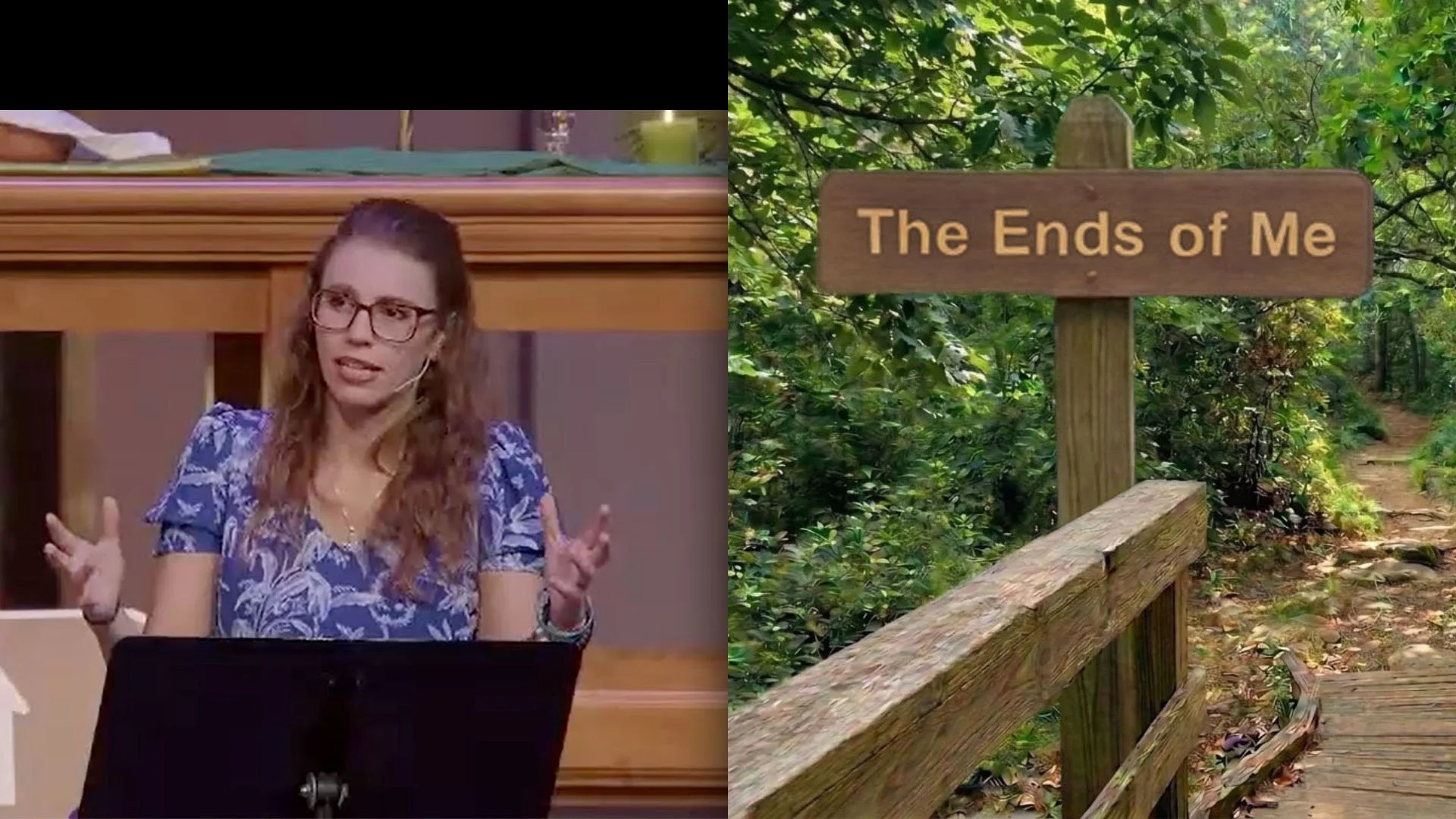
And once we do that, then it requires something from our own will. Leslie continues by saying this: "If you are willing to read the signposts and follow them, you will come out to the place where God wants you to be." If you've spent any time on a hiking trail, especially the ones around here in Gainesville or beyond, you know that it is incredibly important for you to pay attention to your surroundings, to the signs that are on the trail, those markers that are left by others, the trail that has been previously worn by fellow travelers. If you're not paying attention to those things, you might wind up in a place that you really don't want to be. And so it is with our faith journey. God can and will use anything and everything to keep us on the journey toward God's divine will — the well-being of each and every one of us, and all of creation.
You know who got really good at following and reading the signs that the Holy Spirit placed in front of him? Peter. Do you remember Peter? He was that disciple — the one that always had to be the first to answer Jesus's question, even if he didn't get it right at all. He was that Peter who denied Jesus three times before Jesus was hung on the cross. He was that Peter whom Jesus then forgave and said that the early church would be placed upon his shoulders as the foundation. That Peter finally got his act together. And you can read all about it in the book of Acts.
After the story of Pentecost, where the Holy Spirit moved with tongues of fire and bursts of language, God was ready to expand the ministry of the early church to those who were not from the Jewish tradition. In preparation for this expansion, Peter receives a vision from God of an all-you-can-eat buffet. In this vision, a blanket is lowered to Peter's line of sight, and on this blanket are all of the animals that were previously outlawed to eat underneath the Jewish laws and customs. This law additionally outlawed relationships or friendships and any interaction with people who would think this was a really good menu to choose from — namely people who were from Gentile origin and did not grow up in the Jewish tradition.
Three times God invites Peter to partake of anything on this blanket that he wanted. And when Peter objected, a voice spoke to him, saying, "Never consider unclean what God has made pure." Here is where we pick up the story in Acts chapter ten.
While Peter was brooding over this vision, the Spirit interrupted him. "Look, three people are looking for you. Go downstairs. Don't ask questions. Just go with them, because I have sent them." So Peter went downstairs and told them, "I'm the one you're looking for. Why have you come?" — that sounds like a question to me — They replied, "We've come on behalf of Cornelius, a centurion and righteous man, a God-worshiper who is well respected by all Jewish people. A holy angel directed him to summon you to his house and to hear what you have to say." Peter invited them into the house as his guests. The next day he got up and went with them, together with some of the believers from Joppa.
We do see a little bit of the old Peter come back here, don't we? He does go with these men, but not without trying to exercise his own will in the situation by asking a question after explicitly being told not to in that vision. Good old Peter. But he did go with them to visit Cornelius and the guests that Cornelius had invited to his home.
And this is very significant. Cornelius was a Roman centurion — he was not someone who was raised in the Jewish tradition, and so he was a Gentile, and it was against the law for Peter to go even into his home. But Peter went anyway. Not only that, Cornelius was a member of the government that was oppressing the Jewish people and the early Christians at the time. But Peter chose to follow the movement of the Holy Spirit, the signs that the Spirit had placed in his life. He went anyway.
And as it turns out, if you read further in the story, Peter had a rip-roaring time. He preached one of his most influential sermons, and many people asked to be baptized after hearing it. He experienced another movement of the Holy Spirit very similar to the one at Pentecost — so much so that historians have started referring to that story as the second Pentecost.
But what if Peter had decided not to go? Surely God would have found another way to make this moment happen for Cornelius and the people gathered there, because it was God's will. But if Peter had said no, he would have missed out on the experience of a lifetime. Sure, he would have kept preaching and leading the church for the Jews, and everyone on the outside looking into Peter's life wouldn't have known any different. From the outside looking in, he would have still been doing something that was considered holy and good. "Lord, Lord, didn't we prophesy in your name and expel demons in your name, and do lots of miracles in your name?" If Peter had said no, Jesus would have said, "I never knew you," because Peter would have heard the clear and direct call from God and said no anyway.
And if he had said no, he would have missed out on the experience of a lifetime. While he was in Cornelius's home, he cultivated new friendships, he experienced a new culture, and participated in the fullest, most beautiful expression of God's kingdom. But more than that, he would have missed the opportunity to deepen his connection with Christ, who was his Lord.
Because Peter did actually listen to the will of God, his life was completely changed from this moment on. Peter listened to the Holy Spirit with his whole body. He discerned with his mind and reasoned through the context clues happening in his life — the meaning of the vision of the blanket being drawn down — even when he didn't fully understand the meaning of the vision as he was still grappling with it. He chose to move his body. He went with the movement of God to Cornelius's home, and he followed the signs. It was only in his movement, in the following, that he came to fully understand the beauty that Christ was leading him to.
Sometimes you don't understand the movement of God's will until you are already on the other side. Sometimes listening to the signposts that show up in your life means trusting that God's Spirit can and will show up through anyone and anything, even when the meaning is unclear at the time. The Holy Spirit might show up through close friends who are willing to tell you the hard truths. The Holy Spirit might show up through an opportunity that seems just too good to be true, or through an encounter with someone you least expected on the street or in the grocery store, or through your own conscience as you revisit a moment when things didn't quite turn out the way you'd intended. Listening well means trusting in the divine will, even when the reason isn't always clear.
At least that has been my experience. It's been over two years since I followed the movement of God's will, even when the path forward seemed treacherous and fearful and unclear. In that moment, I listened to the Spirit's call amid the voices of the people I trusted most in my life, and I signed a piece of paper that ended a marriage that I thought would last my entire life. And it would have been so much easier to stay — to stay in that place of unhappiness, boxed into what I thought the world wanted from me. Nothing would have changed from the outside looking in. I would have remained preaching and teaching here. You wouldn't have known any different. But my soul would have continued to move further and further from the wholeness that God desired and still desires for me. I would have continued raising my children the best that I could.
So with a giant shove from the Holy Spirit and the endless support of so many of you, I signed. And here I stand two years later, and the beauty and the wholeness that I have experienced is beyond my comprehension. It wasn't easy. It was heartbreaking. But listening to the movement of God's Spirit was absolutely worth it for the well-being of myself and for my children.
Friends, I believe beyond a shadow of a doubt that God's will is for the well-being and the wholeness of you and me and all of God's creation — that is the goal. And when Christ is our Lord, our lives are shaped again and again as we are called to participate in bringing about that very wholeness for ourselves and for the world around us.
So the question we hold is, where have we seen the signs of God's Spirit calling us into something new, something different, something that might be incredibly difficult, or something that you never expected, maybe even didn't think you had time for? It is those signs that just might point to a path that will change your life for good. Because when you choose to move with God, when you choose to listen for God's divine path that is carved by Christ, the journey is unexpectedly beautiful. It's hard, maybe sad and uncomfortable at times, but beautiful. And it is always worth it.
So follow the signs. Move your body with the movement of God's divine will. Trust me, it's worth it.
Amen.